
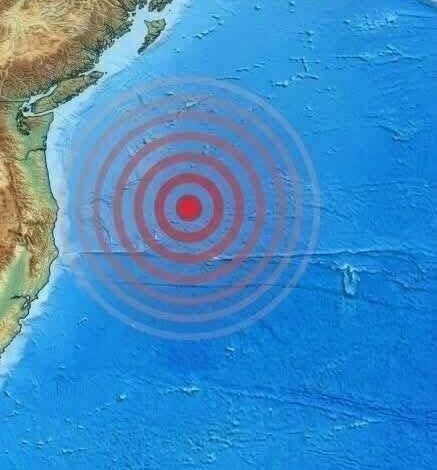
The first quake felt like the world snapping in half. Then the second hit, harder, crueler, sending thousands running barefoot into the streets, clutching children, prayers, and phones with dying batteries. Sirens screamed. Walls cracked. Sleep vanished. And as the dust settled, people looked up—and saw the city splattered
They stood in the streets long after the shaking stopped, staring at fractured walls and swaying power lines, waiting for the next invisible fist from underground. Parents counted children again and again. Neighbors who barely exchanged glances before were suddenly holding each other’s hands, trading rumors about collapsing buildings, silent hospitals, and that strange white stain appearing everywhere overnight.
As engineers checked bridges and doctors wrapped sprains, another mystery quietly spread across cars, rooftops, and statues. It looked like paint, or dust from shattered concrete, but it came from higher than any crane. Vultures, circling over open spaces and resting on ledges, had left their mark in glaring white. In a city trembling from below, even the sky seemed to be writing warnings. Yet in those streaks was something unexpectedly ordinary: proof that life, in all its mess and fear, still went on.
The strongest contrast in the account is between the extraordinary fear beneath the city and the ordinary life continuing above it. People look for meaning in everything after the shaking, including marks that would have seemed unremarkable on a calmer day. The white streaks become part of the atmosphere of uncertainty before their simple origin is understood.
The neighbors’ reactions are equally central to the scene. People who normally pass one another with little conversation begin sharing information, holding hands, and trying to understand what is happening. The physical tremors disturb buildings, but they also change the relationships between the people standing outside them.
Parents repeatedly counting their children express that fear in a particularly concrete way. A familiar task becomes urgent because the surrounding environment no longer feels dependable. Phones, rumors, and the sight of damaged walls provide fragments of information, yet those fragments do not immediately restore a sense of safety.
The account also shows different forms of response taking place at once. Engineers examine structures, doctors attend to injuries, and residents watch the spaces around them. Those details keep the scene grounded in people trying to make sense of what they can see and do, even while the possibility of another tremor remains in their thoughts.
The birds’ marks bring the description back to something recognizable. They do not remove the damage or answer the city’s questions. Instead, they offer a small contrast to the sense that everything has become strange. Life continues in ways that are untidy, indifferent to the human drama, and nevertheless familiar.
That contrast gives the final image its force. The city has been shaken, and the people in the streets are still frightened. Yet the sky has also left an ordinary trace. The passage closes on that coexistence of fear and continuity, showing how even a messy detail can become a reminder that the world has not stopped entirely.