
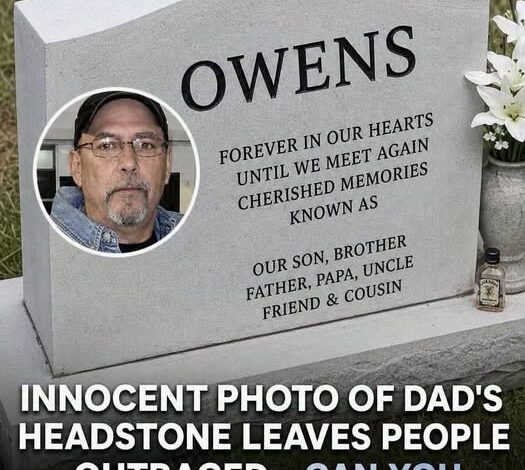
A hidden message on a gravestone has turned a family’s tribute into a painful dispute. His children saw a final joke worthy of their father, but cemetery officials saw a problem in a place shared by grieving families. Now the disagreement raises a deeply personal question: who gets to decide what belongs in someone’s most lasting and intimate memo…
→
The inscription reportedly used an acrostic, arranging letters to reveal wording that visitors might initially overlook. For the deceased man’s children, the concealed phrase captured their father’s humor—a familiar piece of his personality preserved in stone. They considered it an affectionate remembrance, not an attempt to disrespect anyone else. Cemetery officials viewed the tribute differently, bringing a private expression of love into conflict with expectations for a communal place of mourning.
The account does not identify the exact message or explain whether the disagreement was resolved. What it reveals is a difficult balance: relatives want the freedom to remember someone honestly, while cemetery administrators must consider everyone who visits. Rules can protect a peaceful setting, yet unconventional memorials can hold meaning that strangers never see. At its heart, this dispute asks how much room shared spaces should make for the individuality of those buried there—and the people missing them.
The disagreement begins with two very different ways of reading the same object. A gravestone is a personal tribute chosen by people who knew the deceased, but it is also part of a cemetery that other families visit. His children saw a reference to their father’s sense of humor. Administrators saw wording that could affect the atmosphere of the shared setting. Neither interpretation required the other side to experience the inscription in the same way.
An acrostic makes that difference particularly clear. The message is not presented in the most obvious reading of the words; it emerges through the arrangement of letters. For relatives, that hidden element may have felt like an inside joke, preserving a familiar part of the person they loved. To someone encountering the marker without that history, the same discovery could feel unexpected or inappropriate. The emotional context known to the family does not automatically travel with the inscription.
The account leaves several details unresolved. It does not provide the exact phrase, identify the full terms of the cemetery’s rules, or explain whether the marker was ultimately changed. Those missing details limit any judgment about the specific dispute. They also make it important not to turn the disagreement into a simple story in which one side must be acting without care. The source describes different responsibilities and attachments meeting in a difficult place.
For the children, changing the tribute could feel like losing another piece of their father. For cemetery officials, allowing an exception could raise questions about what other visitors might reasonably expect. The challenge lies in finding room for individuality while preserving a place where many different families grieve.
That is why the marker became more than a matter of design. It brought a family’s private language of remembrance into a public setting, where affection, humor, rules, and the needs of strangers could no longer be considered separately.