
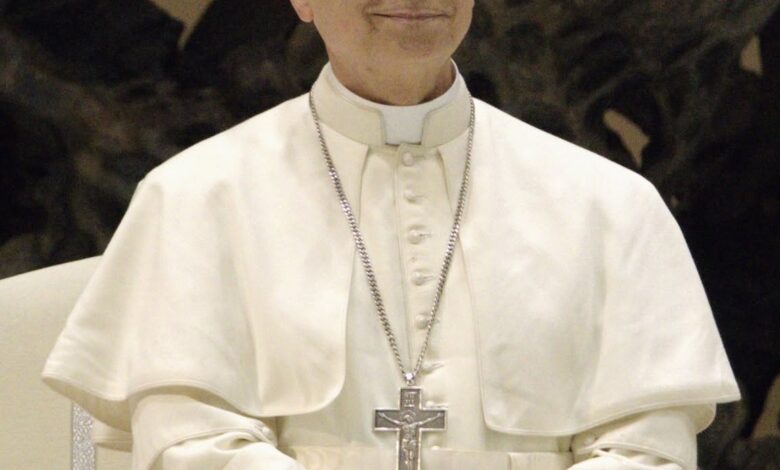
Prologue: When the World Waits for News From the Vatican
There are moments when an institution that has stood for centuries suddenly finds itself at the center of an intensely personal question. For the Roman Catholic Church, few questions command as much attention as the health of the person who occupies the Chair of Saint Peter.
The Pope is more than the leader of a religious organization. He is a spiritual guide for millions of Catholics, the public face of the Holy See, and an influential voice in international discussions about peace, poverty, migration, human dignity, and the future of the planet. His words can reach communities separated by oceans, languages, and political borders. His presence at a public celebration can unite people who might otherwise have little in common.
That is why any report suggesting a serious health problem involving Pope Leo XIV can attract immediate international attention.
Yet when a story begins circulating with claims about a diagnosis, an operation, or a medical emergency, the first responsibility is to establish what has actually been confirmed. Dramatic headlines can travel around the world in minutes, while the evidence needed to verify them may remain unavailable or incomplete.
A detailed account circulating online describes an alleged lung cancer diagnosis, major thoracic surgery, a rapid recovery, and a reassuring pathology report. It presents a sequence of specific dates, medical findings, hospital procedures, and supposed statements from the Pope. The narrative is compelling, but its details should not be treated as established facts without reliable confirmation from the Vatican or other credible sources.
This distinction matters. A person’s medical condition is sensitive information, even when that person holds one of the world’s most visible public offices. False reports can cause unnecessary fear among believers, mislead readers about serious illnesses, and create confusion about the future of an institution with a global presence.
At the same time, uncertainty about a particular report does not make the broader subject unimportant. The health of a Pope naturally raises questions about leadership, the demands of the papal office, the role of medical professionals, and the relationship between faith and modern medicine.
What happens when a spiritual leader must confront physical limitations? How does the Vatican balance public communication with medical privacy? What would a serious illness mean for the administration of the Holy See? And why does a report about one man’s health become a matter of concern for people across the world?
These questions deserve careful examination.
Rather than assume that every detail in the circulating account is accurate, this article explores the medical context, the responsibilities of the papacy, the challenges of recovery after major surgery, and the importance of distinguishing confirmed information from speculation.
The story is ultimately about more than a headline. It is about the human reality behind a global institution—and the responsibility to seek the truth before drawing conclusions.
Chapter 1: Why News About Pope Leo XIV Captures Global Attention
The papacy occupies a distinctive position in the modern world. It combines religious leadership, institutional authority, international diplomacy, and a centuries-old tradition that continues to influence public life.
For Catholics, the Pope is the Bishop of Rome and the successor of Saint Peter according to Catholic teaching. He serves as a visible symbol of unity for a worldwide Church whose members live in vastly different cultural, economic, and political circumstances.
A statement delivered in Rome may be read in a village in the Philippines, discussed in a parish in Brazil, or translated for communities across Africa and Asia. Papal visits can draw enormous crowds, while major speeches often receive attention far beyond Catholic media.
This global reach explains why questions about the Pope’s health can quickly become international news.
The human being behind the office
The papal role is demanding. Public audiences, liturgical celebrations, meetings with bishops, diplomatic discussions, administrative decisions, and pastoral communications all require time and concentration.
Although the Pope is supported by senior officials, advisers, medical professionals, and other members of the Vatican staff, the office still carries substantial personal responsibilities.
A health problem could affect the timing of public appearances, the length of meetings, travel arrangements, and the pace at which the Pope carries out his duties. The precise consequences would depend on the nature and severity of the condition.
However, it is important not to assume that every medical concern threatens the continuity of the papacy. Temporary illness does not automatically prevent a Pope from performing his responsibilities, and adjustments can be made when rest or treatment becomes necessary.
The Vatican has established procedures and institutional structures that allow much of its ordinary administration to continue even when the Pope’s schedule changes.
The Vatican as a center of international diplomacy
The Holy See maintains diplomatic relations with countries around the world and participates in international discussions on humanitarian issues, religious freedom, conflict resolution, and human rights.
Vatican officials regularly meet political leaders, ambassadors, religious representatives, and international organizations. The Pope’s public position can influence the tone of these conversations, especially when the Church addresses wars, humanitarian emergencies, or threats to vulnerable communities.
A serious health announcement would therefore attract attention from diplomats as well as religious communities.
Nevertheless, speculation about political consequences should be approached carefully. A medical diagnosis alone does not establish that diplomatic negotiations will stop, that major policies will change, or that the Church faces an immediate leadership crisis.
The practical effect depends on the circumstances and on the arrangements made by the Vatican.
Why clear communication matters
When information about a public figure’s health is incomplete, uncertainty creates an environment in which rumors can flourish.
An unexplained absence from a public event may lead to speculation. A delayed announcement may prompt questions. A photograph taken from an unusual angle can be interpreted as evidence of illness, even when it reveals very little about a person’s actual condition.
For that reason, reliable communication is essential.
A trustworthy medical update should distinguish between confirmed facts, preliminary assessments, and information that remains private. It should avoid suggesting that an outcome is certain before doctors have enough evidence to support that conclusion.
The public also has a responsibility. Readers should consider the source of a report, look for corroboration, and be cautious when a headline contains extraordinary medical details without links to an official statement or reputable reporting.
In the case of the alleged illness described in the circulating narrative, the specific diagnosis, surgical date, pathology findings, and recovery timeline require independent verification. They should not be repeated as established events simply because they appear in a detailed account.
The larger lesson is clear: the health of a Pope is a legitimate subject of public interest, but public interest does not remove the need for accuracy.
And to understand why reports about a possible lung condition can sound especially alarming, it helps to examine the medical science behind lung cancer itself.
Chapter 2: Lung Cancer and the Challenge of Early Detection
The circulating account describes Pope Leo XIV as having undergone surgery for lung adenocarcinoma. That specific claim remains unverified here, but lung adenocarcinoma is a real and important medical condition whose diagnosis and treatment can help explain why such a report would attract attention.
Lung cancer is not a single disease. It includes several types of malignant tumors that differ in their cellular characteristics, patterns of growth, and responses to treatment.
Lung adenocarcinoma is a form of non-small cell lung cancer. It develops from gland-forming cells and is frequently found in the outer regions of the lungs. It can occur in people who have smoked and in people who have never smoked.
Smoking is a major risk factor for lung cancer, but it is not the only one. Other factors can include exposure to radon, certain workplace carcinogens, air pollution, and a person’s genetic susceptibility. In some patients, no single cause can be identified with certainty.
Why symptoms may not appear early
One reason lung cancer can be difficult to detect is that early disease may produce few or no noticeable symptoms.
A small tumor may not interfere significantly with breathing or cause pain. The lungs have considerable functional capacity, and changes in one area may not immediately produce obvious symptoms.
When symptoms do develop, they can include a persistent or changing cough, shortness of breath, chest discomfort, coughing up blood, unexplained weight loss, or unusual fatigue. These symptoms are not specific to cancer and can arise from many other conditions, but persistent or concerning changes should be assessed by a healthcare professional.
The absence of symptoms, however, does not establish that a person has cancer. Nor does every small lung nodule indicate malignancy.
Pulmonary nodules are relatively common findings on chest imaging. Many are caused by old infections, inflammation, scar tissue, or other benign processes. Doctors assess their size, appearance, growth over time, and the patient’s risk factors to determine whether further testing is necessary.
The role of medical imaging
Imaging can reveal abnormalities that are not apparent during an ordinary physical examination.
A chest X-ray may identify some lung abnormalities, while computed tomography, commonly known as CT, provides more detailed cross-sectional images. Depending on the findings, clinicians may recommend follow-up imaging, a PET scan, bronchoscopy, needle biopsy, or surgical sampling.
The choice depends on the individual case. A suspicious nodule may require additional investigation, but a scan alone does not always establish a definitive diagnosis.
Pathological examination of tissue is often central to confirming the type of cancer. Specialists examine the cells under a microscope and may use additional laboratory tests to determine the tumor’s characteristics.
These distinctions matter because a dramatic headline can make a diagnosis sound immediate and certain, when actual clinical decision-making often involves several stages of assessment.
Who should be screened?
Lung cancer screening is not the same as ordering a chest scan for everyone.
In the United States, annual low-dose CT screening is recommended for certain adults aged 50 to 80 who have a substantial smoking history and currently smoke or quit within the previous 15 years. Eligibility criteria and recommendations vary by country and may change as evidence develops.
Low-dose CT screening can reduce lung cancer mortality in appropriately selected high-risk populations. However, screening can also produce false-positive results, reveal abnormalities that never would have caused harm, and lead to additional testing.
For people who do not meet established screening criteria, the appropriate approach depends on their medical history, risk factors, symptoms, and local clinical guidance.
Routine medical care remains important, but it would be misleading to suggest that everyone needs regular CT scans simply because an online story describes a tumor discovered during a checkup.
Why early diagnosis can matter
When lung cancer is identified at an early stage and has not spread, treatment may offer a better chance of long-term disease control or cure.
For selected patients, surgery can remove a localized tumor. Other patients may benefit from radiation therapy, chemotherapy, targeted treatments, immunotherapy, or a combination of approaches.
The appropriate treatment depends on the cancer’s stage, its biological features, the patient’s overall health, lung function, and other clinical considerations.
Early detection can improve treatment options, but it does not guarantee a particular outcome. Even when a tumor appears localized, the medical team must evaluate the pathology and other findings before recommending further care.
This is why claims about a supposed patient’s stage of cancer, successful removal, or need for additional therapy require reliable medical confirmation.
Understanding the science helps readers appreciate the seriousness of lung cancer without accepting unverified details about any individual’s diagnosis.
It also leads to another important question: if a patient undergoes major lung surgery, what does recovery actually involve?
Chapter 3: What Recovery After Major Lung Surgery Really Requires
Surgery to remove part of a lung is a significant medical procedure. The recovery process depends on the amount of lung tissue removed, the surgical technique, the patient’s pre-existing health, and whether complications develop.
The procedure described in the circulating narrative is a right lower lobectomy, which involves removing the lower lobe of the right lung. Lobectomy is an established treatment for selected cases of lung cancer, particularly when the tumor can be removed surgically and the patient can tolerate the operation.
But it is important to distinguish a general medical explanation from a claim that a particular person underwent this procedure. The reported operation involving Pope Leo XIV has not been independently confirmed here.
What happens during a lobectomy?
The surgical team first evaluates whether the patient is a suitable candidate. Assessments may include imaging, lung function tests, blood tests, cardiac evaluation, and other investigations depending on the circumstances.
The operation may be performed through a traditional incision or through minimally invasive techniques, such as video-assisted thoracoscopic surgery or robotic-assisted surgery. The choice depends on the tumor, the patient’s anatomy, the surgeon’s expertise, and the resources available.
During the procedure, surgeons remove the affected lobe and may sample or remove nearby lymph nodes. These nodes help determine whether cancer has spread beyond the primary tumor.
After the operation, the patient is monitored for breathing problems, bleeding, infection, pain, blood clots, and other potential complications. A chest drain may be needed temporarily to remove air or fluid from the space around the lung.
Even when surgery proceeds as planned, the body needs time to recover.
The first days after surgery
The early recovery period often focuses on pain management, breathing exercises, and gradual movement.
Patients may be encouraged to sit upright, walk short distances with assistance, and use techniques designed to help the lungs expand. These activities can reduce the risk of complications associated with prolonged bed rest and help restore functional capacity.
The medical team also monitors oxygen levels, heart rate, temperature, wound healing, and the amount of air or fluid leaving the chest through any drainage system.
Recovery varies considerably. Some patients progress quickly, while others need a longer hospital stay because of pain, reduced lung function, infection, or other complications.
Age alone does not determine the outcome. A person’s overall fitness, underlying conditions, the extent of surgery, and the support available after discharge all influence recovery.
It would therefore be inappropriate to infer that a particular patient recovered unusually quickly without reliable information about that patient’s clinical course.
Rehabilitation after discharge
Leaving the hospital does not mean that recovery is complete.
Patients may experience fatigue, chest discomfort, reduced stamina, disturbed sleep, and shortness of breath during ordinary activities. These symptoms often improve over time, but their duration and severity differ from person to person.
Doctors may recommend walking, breathing exercises, gradual increases in activity, and follow-up appointments. Some patients benefit from pulmonary rehabilitation, a supervised program that can help improve exercise tolerance, breathing management, and confidence during recovery.
The pace of rehabilitation should be individualized. Patients should follow the medical team’s instructions about lifting, driving, exercise, wound care, and returning to work or other responsibilities.
Warning signs such as worsening breathlessness, chest pain, fever, new confusion, or significant wound changes may require prompt medical attention.
The emotional dimension of recovery
A major operation can affect a patient emotionally as well as physically.
The prospect of cancer surgery may create anxiety about the future, while the waiting period for pathology results can be particularly difficult. Patients may worry about whether the tumor has been completely removed, whether further treatment will be needed, and how the diagnosis will affect family life.
Support from relatives, friends, counselors, spiritual advisers, and healthcare professionals can help patients manage these concerns.
For a person with public responsibilities, recovery may also involve deciding when to resume demanding work. A leader may feel pressure to return quickly, but a premature return can make it harder to follow medical advice and rebuild physical strength.
The appropriate goal is not to demonstrate toughness by ignoring symptoms. It is to recover safely while maintaining realistic expectations.
These general principles apply to anyone undergoing major thoracic surgery, whether a private citizen or a world leader.
They also explain why a supposed rapid recovery should not be treated as proof that an operation was minor or that the underlying illness has been permanently resolved. Clinical outcomes depend on evidence gathered over time.
Chapter 4: Pathology Results, Treatment Decisions, and the Meaning of a Cancer-Free Margin
Among the most reassuring statements in the circulating account is the claim that a tumor was completely removed, nearby lymph nodes were clear, and no additional cancer treatment was required.
These are medically meaningful concepts. However, without an authenticated report, they cannot be attributed to Pope Leo XIV as confirmed findings.
Understanding what such results would mean in a genuine clinical case helps explain why they matter so much to patients and their families.
What are surgical margins?
After a tumor is removed, the tissue is sent to a pathology laboratory. A pathologist examines the specimen to determine the type of tumor, its characteristics, and whether cancer cells are present at the edges of the removed tissue.
A negative margin means that cancer cells are not identified at the examined cut edges. This is generally a favorable finding because it suggests that the tumor was removed without cancer reaching those margins.
A positive margin means cancer cells are present at an edge of the specimen, which may indicate that some disease remains in the body. The next steps depend on the circumstances and may involve further surgery or other treatment.
Negative margins are important, but they do not independently prove that cancer cannot return. Microscopic disease may exist elsewhere, and the overall risk of recurrence depends on multiple factors.
Why lymph nodes matter
Lymph nodes are small structures that form part of the immune system. Cancer cells from some tumors can spread through lymphatic channels to nearby nodes and, in some cases, to distant organs.
During lung cancer surgery, lymph nodes may be sampled or removed so that specialists can examine them for cancer cells.
If the relevant nodes are negative, that is generally a favorable result. It can support a conclusion that the cancer has not spread to those examined nodes.
However, lymph node findings must be interpreted alongside the tumor’s size, location, pathological features, and other staging information. A single result does not tell the entire story.
Does every patient need chemotherapy?
No. Additional treatment after surgery depends on the type and stage of cancer, the likelihood of recurrence, molecular findings where relevant, and the patient’s overall health.
Some patients with early-stage non-small cell lung cancer may be managed with surgery followed by surveillance. Others may be advised to receive additional treatment because their cancer has features associated with a higher risk of recurrence.
Depending on the case, options can include chemotherapy, immunotherapy, targeted therapy, or radiation. These treatments have different purposes and are not interchangeable.
Chemotherapy is not automatically required after every lung cancer operation. Equally, the fact that surgery was successful does not automatically mean that additional treatment can be ruled out.
An oncology team weighs the expected benefits and risks before making a recommendation.
Why follow-up remains important
Even when surgery removes all detectable disease and no additional treatment is recommended, patients generally require ongoing follow-up.
Surveillance may involve periodic imaging and clinical assessments. The schedule depends on the cancer type, stage, treatment history, and applicable guidelines.
Follow-up helps clinicians monitor recovery, identify possible recurrence, and address new symptoms or long-term effects of treatment.
It also provides an opportunity to support smoking cessation where relevant, manage other health conditions, and address the emotional consequences of cancer.
The phrase “cancer-free” can be reassuring, but it should be used carefully. In many situations, doctors can say that there is no evidence of disease at the time of evaluation. That is different from guaranteeing that the disease will never return.
For patients and families, clear explanations of the pathology report are essential. Medical language can sound definitive when the actual conclusion is more nuanced.
In a public figure’s case, that need for precision is even greater. A detailed report claiming negative margins, clear lymph nodes, and no need for further therapy should be traceable to a reliable source before being presented as fact.
The broader lesson is that cancer care is a process, not a single dramatic moment. Surgery, pathology, treatment decisions, rehabilitation, and surveillance all contribute to the outcome.
And while medical evidence determines the clinical plan, faith may provide another source of strength for patients who draw meaning and comfort from spiritual practice.
Chapter 5: Faith, Frailty, and the Human Side of Spiritual Leadership
Illness can challenge even people who spend their lives offering comfort to others.
A diagnosis may disrupt ordinary routines, introduce uncertainty, and force a person to confront questions that cannot be answered immediately. For religious believers, it may also prompt reflection on suffering, mortality, hope, and the meaning of prayer.
The Pope’s office gives these questions a public dimension. The person responsible for guiding millions of Catholics is also a human being who may experience pain, fear, fatigue, and the need for help.
That reality does not diminish the role of spiritual leadership. It makes the human dimension of the office impossible to ignore.
The meaning of physical vulnerability
Modern society often celebrates productivity, independence, and the ability to continue working regardless of personal circumstances. Illness can expose the limits of that ideal.
A patient recovering from surgery may need assistance with basic activities, depend on medical equipment, or accept a schedule dictated by physical recovery rather than personal ambition.
For someone accustomed to carrying responsibility, this adjustment can be difficult.
Religious traditions offer different ways of interpreting vulnerability. Within Catholic teaching, human dignity does not depend on strength, youth, professional achievement, or freedom from illness. The sick and the dependent retain the same inherent worth as anyone else.
The experience of illness can therefore become an occasion to recognize the importance of compassion, patience, and solidarity.
It would be inappropriate, however, to invent quotations or personal reflections and attribute them to Pope Leo XIV without a verified source. The spiritual themes discussed here are broader reflections, not confirmed statements from the Pope about the alleged diagnosis.
Prayer and the community of believers
When a prominent religious figure is reported to be ill, prayers often emerge from communities around the world.
Some people attend Mass, others pray the Rosary, and others include the person in private prayers or communal services. These acts can help believers express solidarity and feel connected to a wider community.
Prayer can also provide emotional support to families coping with illness. It may offer a structure for hope and reflection during periods when medical outcomes remain uncertain.
For many people, faith and medical treatment are not opposing choices. They can coexist: a patient may trust physicians to provide evidence-based care while drawing spiritual strength from prayer and religious community.
At the same time, prayer should not be presented as a substitute for appropriate medical care. Serious illnesses require proper evaluation and treatment, and patients should be able to receive medical support without being made to feel that seeking treatment reflects a lack of faith.
The relationship between spirituality and medicine is often most constructive when both are approached with humility and respect for their distinct roles.
The responsibility of a religious leader
A Pope’s public responsibilities can make it difficult to balance the need for rest with expectations from the faithful.
People may wish to see the Pope at public audiences, liturgical celebrations, or major religious events. Others may look to him for guidance during wars, humanitarian crises, or periods of social instability.
Yet a leader who is recovering from illness may need to reduce public appearances or delegate certain tasks.
Such adjustments do not necessarily represent weakness. They can be a responsible response to medical advice and an acknowledgment that sustainable leadership requires attention to physical limits.
The same principle applies to leaders in other fields. A person does not have to ignore health needs to demonstrate commitment to a mission.
In the Vatican, institutional continuity also matters. Senior officials, established administrative procedures, and the broader structure of the Holy See allow many activities to continue even when the Pope’s personal schedule changes.
The extent of any adjustment would depend on the actual medical circumstances, which is another reason verified information matters.
A genuine health announcement should help the public understand what is known without inviting speculation about every aspect of the Pope’s private life.
Ultimately, the public significance of illness is not limited to whether a leader can return quickly to work. It also concerns how institutions respond to vulnerability, how communities support the sick, and whether public discussion preserves the dignity of the person involved.
Chapter 6: How the Vatican Could Manage a Period of Medical Recovery
If a Pope were to undergo major surgery or require an extended period of recovery, the Vatican would face a practical challenge: maintaining essential responsibilities while respecting the medical advice given to the patient.
The precise arrangements would depend on the nature of the illness and the Pope’s capacity to work. There is no single recovery schedule that applies to every medical condition.
Nevertheless, the structure of the Holy See provides a useful framework for understanding how ordinary governance could continue during a period of reduced activity.
Administrative responsibilities
The Roman Curia includes offices responsible for areas such as doctrine, bishops, evangelization, communication, diplomacy, and financial administration.
These departments carry out work under established rules and within their respective responsibilities. Senior officials can continue managing many routine matters even when the Pope’s public schedule is reduced.
Some decisions require the Pope’s personal approval, while others can be handled by authorized officials. The precise allocation depends on the type of decision and the relevant procedures.
A temporary reduction in audiences would not automatically mean that the Vatican’s entire administrative system had stopped functioning.
Public audiences and religious celebrations
The Pope’s public calendar can be adjusted when necessary.
Depending on medical advice, a schedule might involve shorter appearances, fewer meetings, remote communication where appropriate, or delegation of certain speaking duties to other clergy.
The aim would be to balance the importance of pastoral contact with the need for rest and recovery.
These measures should not be interpreted as evidence of a particular diagnosis unless reliable reporting establishes the connection. Public appearances can change for many reasons, and photographs or brief videos are not sufficient to determine a person’s medical condition.
International travel
Apostolic journeys can be physically demanding. Long flights, changes in time zones, crowded venues, outdoor celebrations, and tightly scheduled meetings may place considerable strain on a recovering patient.
If a Pope required substantial rehabilitation, travel plans could be reviewed in consultation with medical professionals and event organizers.
Possible adjustments might include postponing a visit, reducing the number of events, shortening a journey, or changing the itinerary. The appropriate decision would depend on the patient’s health and the purpose of the trip.
Such changes would not necessarily indicate a permanent limitation on the Pope’s ability to serve.
The importance of reliable updates
During a period of medical recovery, the public may naturally seek frequent information. Yet frequent updates are not always possible or appropriate.
Medical professionals must protect patient confidentiality, and the Vatican must balance public interest with the Pope’s privacy.
A useful update would communicate confirmed information about the person’s condition and the practical implications for public duties, without disclosing unnecessary medical details.
It should also avoid exaggerated certainty. Recovery can involve setbacks, unexpected symptoms, or changes in the treatment plan. A statement describing a patient as stable at one moment cannot guarantee every later outcome.
For readers, the best approach is to distinguish official information from commentary, anonymous claims, and recycled stories.
When a report gives precise dates, quotes, medical measurements, and predictions but does not provide a verifiable source, those details should be treated cautiously.
This is not an argument against reporting on the health of public figures. It is an argument for reporting responsibly.
A well-sourced account can help the public understand what has happened and what may happen next. An unverified account can do the opposite, creating a false impression of certainty and making later corrections more difficult.
The Vatican’s institutional resilience and the public’s interest in the Pope’s well-being can coexist with the principle that medical claims must be supported by evidence.
Chapter 7: The Wider Public Health Lesson—Awareness Without Fear
Even when a particular medical story remains unconfirmed, it can prompt useful questions about preventive care and the importance of understanding serious illnesses.
Lung cancer is one example. Its risk factors, screening recommendations, diagnostic process, and treatment options are often misunderstood. Public discussion can help correct these misunderstandings when it is grounded in reliable medical information.
Moving beyond common misconceptions
One persistent misconception is that lung cancer affects only people who smoke heavily.
Smoking remains a major risk factor, but lung cancer also occurs among people who have never smoked. Exposure to radon, certain occupational substances, air pollution, and other factors can contribute to risk.
Another misconception is that a person without symptoms cannot have lung cancer. Early disease may indeed be asymptomatic, which is one reason evidence-based screening is recommended for certain high-risk groups.
However, the opposite error is equally problematic: assuming that every incidental lung nodule is cancer. Many nodules are benign, and further assessment is needed to determine their significance.
Public health information should help people understand both sides of this issue.
Screening is not the same as universal testing
Screening tests are designed for people who do not have symptoms but meet particular risk criteria. Diagnostic tests, by contrast, investigate symptoms or abnormalities that have already been identified.
For eligible individuals, low-dose CT screening can reduce the risk of dying from lung cancer. But indiscriminate imaging of everyone is not recommended because it can lead to false alarms, unnecessary procedures, and exposure to medical risks.
Anyone concerned about lung cancer should discuss their personal risk factors with a qualified healthcare professional. People who have persistent respiratory symptoms should seek medical evaluation rather than waiting for a screening appointment.
Public health decisions should be guided by evidence, not by fear generated by an alarming headline.
The role of smoking cessation
For people who smoke, quitting is one of the most important steps they can take to improve their health.
Smoking cessation reduces the risk of several serious diseases, including lung cancer, heart disease, stroke, and chronic respiratory illness. Benefits begin after quitting and continue to accumulate over time.
People who have tried to quit before may benefit from counseling, structured support, nicotine replacement therapy, or prescription treatments when appropriate.
The goal is not to blame people for their illness. Cancer is complex, and no single factor explains every case. The goal is to provide people with practical tools that can reduce risk and improve health.
Communicating cancer responsibly
The language used in cancer reporting can influence how readers perceive the disease.
Calling cancer a “silent killer” may communicate urgency, but it can also encourage unnecessary fear if the term is used without context. Describing a diagnosis as a death sentence is inaccurate because outcomes vary widely by cancer type, stage, treatment, and individual circumstances.
Likewise, reporting that a patient has been “cured” after one procedure may create unrealistic expectations if long-term follow-up remains necessary.
Responsible health communication recognizes uncertainty without minimizing the seriousness of disease. It explains what medical findings mean, what they do not mean, and what questions remain unanswered.
This principle is especially important when reporting on a public figure. A dramatic story may attract attention, but accuracy should remain the priority.
If Pope Leo XIV or the Vatican were to issue a verified medical statement, that statement would provide the appropriate starting point for understanding the situation. Until then, the alleged diagnosis and treatment described in the circulating narrative should not be presented as established medical facts.
Chapter 8: Looking Ahead—Leadership, Uncertainty, and the Search for Truth
The future of any papacy is shaped by many forces: the Pope’s priorities, the needs of the Church, changes in global society, and the capacity of the institution to respond to new challenges.
Questions about health can enter that picture because leadership depends, in part, on a person’s ability to carry out demanding responsibilities. Yet medical uncertainty should not be turned into predictions about resignation, institutional crisis, or the end of a pontificate without evidence.
Continuity does not depend on constant public visibility
A Pope’s public presence is important, but the work of the Church extends beyond televised appearances and large gatherings.
Catholic communities continue their ordinary activities through parish life, education, charitable work, worship, and service to vulnerable people. Bishops and other clergy maintain responsibilities in their own regions, while the Vatican’s departments continue much of their established work.
A temporary change in the Pope’s schedule would not erase those activities.
Similarly, speculation about a Pope’s future should not be confused with a formal institutional decision. Questions about resignation or succession are governed by specific procedures and cannot be resolved simply by interpreting a photograph, an absence, or an online rumor.
The priorities that extend beyond one medical story
The Catholic Church faces major challenges that would remain important regardless of an individual health report.
These include responding to poverty, protecting children and vulnerable people, addressing internal divisions, supporting humanitarian relief, engaging with other religions, and considering the ethical implications of technological and environmental change.
The Pope’s leadership can influence how these issues are discussed, but they are also addressed by the broader Church and by numerous organizations working in communities around the world.
A health-related headline should not obscure those continuing responsibilities or create the impression that the Church’s future depends entirely on one unverified story.
The value of humility in uncertain moments
When people care deeply about a public figure, uncertainty can be uncomfortable. They may want an immediate answer, a reassuring prognosis, or a definitive explanation of what will happen next.
But the responsible response to incomplete evidence is not to fill the gaps with invented details.
It is to identify what is known, acknowledge what remains unknown, and wait for credible information before reaching conclusions.
That approach does not prevent meaningful discussion. On the contrary, it makes discussion more useful by separating medical facts from interpretation and personal belief.
It also respects the person at the center of the story. A public figure’s position may make some aspects of their health relevant to public responsibilities, but it does not justify inventing a diagnosis or attributing statements to them without evidence.
For Pope Leo XIV, as for any individual, reliable information should take precedence over the emotional force of a dramatic narrative.
Epilogue: Beyond the Headline, the Human Story Remains
A report about a Pope’s health can travel far beyond Rome because it touches several subjects at once: faith, leadership, medical science, mortality, and the hopes of people who look to the Church for guidance.
That combination makes the subject inherently compelling. It also makes accuracy especially important.
The account describing Pope Leo XIV’s alleged lung adenocarcinoma, thoracic surgery, favorable pathology results, and rapid return to public duties contains many specific claims. Without reliable independent confirmation, those details cannot responsibly be treated as a verified chronology of events.
What can be said with confidence is that lung cancer is a serious disease, that early diagnosis can improve treatment options for eligible patients, and that surgery may be an effective treatment for selected localized tumors. Recovery requires individualized medical care, and even favorable surgical findings may need to be followed by continued surveillance.
It is also reasonable to recognize that a Pope’s health carries institutional significance. The papacy involves demanding responsibilities, and the Vatican must balance continuity of leadership with the human need for medical care and rest.
For believers, illness may inspire prayer, compassion, and reflection on human vulnerability. For medical professionals, it highlights the importance of accurate diagnosis, evidence-based treatment, and honest communication. For readers, it offers a reminder to approach dramatic health claims with care.
The most meaningful response to uncertainty is neither panic nor dismissal. It is thoughtful attention to evidence.
If reliable information about a medical event becomes available, it should be assessed on its merits, with respect for the person involved and without exaggerating what the findings mean.
Until then, the central lesson remains broader than any single headline: human beings can face illness regardless of status or responsibility, modern medicine offers important tools but not guarantees, and public discussion is most valuable when compassion is matched by accuracy.
The story of a spiritual leader’s health, if and when confirmed, deserves to be told with seriousness and humanity. It should not need invented details to matter.
And in a world where information moves faster than verification, the search for truth may be one of the most important responsibilities shared by journalists, institutions, and readers alike.