
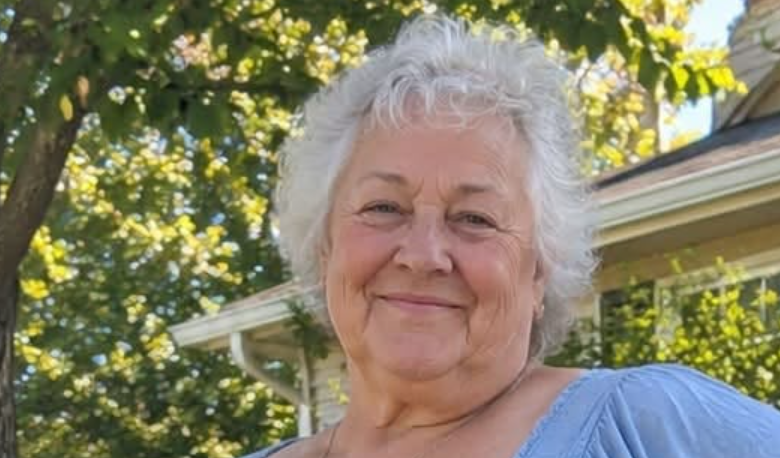
For twelve years, I kept a sealed envelope in my bedside drawer. I never opened it, even during the lonely evenings when I missed my husband more than words could explain.
The envelope rested beneath my reading glasses, a tube of hand cream, and a small stack of birthday cards from my grandchildren. My husband’s handwriting appeared across the front, spelling out one familiar name.
Margaret.
My husband, Robert, had given me the envelope three days before he passed away. He was in a hospital bed, tired and weak after a long illness, but his eyes were as gentle as ever.
“Promise me something, Maggie,” he said, placing the envelope in my hands.
“Anything, Robert.”
“Keep this somewhere safe. Open it only when something happens that you cannot explain.”
I wanted to ask what he meant, but he looked so exhausted that I decided to wait. I promised him I would follow his instructions.
Three days later, Robert was gone.
For twelve years, I honored that promise. I raised our children as best I could, welcomed new grandchildren into the family, and learned how to live in the quiet house we had shared for fifty years.
I thought I knew everything important about my husband.
At eighty years old, I discovered how wrong I had been.
A Change I Could No Longer Ignore
My name is Margaret Whitmore. I have three children, seven grandchildren, and four great-grandchildren. Robert and I built our life in a modest Connecticut home where the maple tree in the backyard grew alongside our family.
Robert worked in the insurance industry for nearly four decades. He wore the same brown suit for years, clipped coupons before shopping, and drove his old Buick until the mileage became a family joke.
He was practical, dependable, and careful with money.
Or so I believed.
My unexpected discovery began with a change in my health.
During the spring, I noticed that my waistline was gradually increasing. At first, I blamed my eating habits. By summer, my clothes had become uncomfortable, and I found myself choosing loose dresses instead of my usual trousers.
By the end of August, the swelling in my abdomen had become difficult to ignore. I sometimes felt uncomfortable sitting in my favorite chair, and bending down to tie my shoes left me unusually short of breath.
I kept telling myself that these things came with age.
Looking back, I wish I had contacted a doctor sooner.
On the first Sunday of September, my family gathered at my house for our traditional dinner. I prepared pot roast, mashed potatoes, and green beans, just as I had done for decades.
Halfway through the meal, my oldest son, Thomas, put down his fork.
“Mom, we need to discuss the house again.”
I sighed. “Thomas, can we enjoy dinner first?”
“You know I’m worried about you living here alone. The stairs are steep, the furnace is old, and the property taxes keep increasing.”
Thomas had always been the practical one. He worked as an accountant and approached nearly every problem as if it could be solved with a calculator.
He had been helping me manage my finances since I recovered from a serious illness several years earlier. His intentions were good, but sometimes his concern made me feel as though I had lost the right to make my own decisions.
“I raised three children in this house,” I reminded him. “Your father planted that maple tree. I’m not ready to leave.”
Thomas shook his head, but before he could respond, his wife, Sarah, gently interrupted.
“Mom, can I ask you something?”
“Of course, sweetheart.”
She looked at my abdomen with concern.
“Have you spoken to a doctor about the swelling?”
The conversation stopped.
I tried to laugh it off, but Sarah remained serious.
“Please have it checked,” she said. “I would feel much better knowing you’ve spoken to someone.”
Her kindness made it difficult to refuse. I promised to arrange an appointment, although I still hoped the problem would disappear on its own.
Three nights later, I woke with uncomfortable pressure in my abdomen. I could not find a comfortable position, and the swelling seemed more noticeable than ever.
By morning, I knew I could no longer put off getting medical advice.
I called my youngest son, Daniel.
“Could you take me to the hospital?” I asked. “Something isn’t right.”
He arrived within fifteen minutes.
When he saw me sitting at the kitchen table, he pulled out a chair and held my hand.
“Why didn’t you tell me it had gotten this uncomfortable?”
“I didn’t want everyone worrying about me.”
He gave me a sad smile.
“Mom, we’re your family. Let us help.”
His words reminded me of Robert. My husband had always said that families were meant to carry difficult moments together.
I wondered why it had taken me so long to remember.
An Unexpected Discovery
At the hospital, a doctor named Helen Parker examined me and arranged an ultrasound.
The technician moved the scanning device across my abdomen, studying the images carefully. After several minutes, she stepped outside to consult the medical team.
I watched Daniel from the examination bed.
“Do you think something is wrong?” I asked.
He squeezed my hand.
“Let’s wait for the doctor to explain everything.”
Dr. Parker returned with a specialist named Dr. Samuel Osei. They explained that the scan showed a large fluid-filled mass that appeared to be associated with my left ovary.
They needed additional imaging and laboratory tests to understand its nature.
“Could it be something serious?” I asked.
“It is too early to know,” Dr. Osei replied. “Some masses are benign, while others require different treatment. We need more information before making a diagnosis.”
His calm explanation helped me understand that uncertainty was not the same as receiving bad news.
I underwent further testing that afternoon. My children arrived, and the hospital room gradually filled with familiar voices.
Thomas made calls about insurance and medical expenses. Sarah sat beside me, while Daniel stayed close enough that I could reach for his hand whenever I felt anxious.
Later, Dr. Parker asked Daniel and me to speak with her privately.
She explained that the scans confirmed the presence of a large ovarian mass. The specialist recommended surgery, followed by examination of the removed tissue to establish a definitive diagnosis.
Then she mentioned something unexpected.
“When we reviewed your available medical records, we found an archived document connected to an organization called Carter Biomedical Research,” she said. “It appears to be associated with an older research project. Does that name mean anything to you?”
I felt a chill run through me.
Carter.
For twelve years, I had remembered a woman with that surname.
Three days before Robert died, a woman named Evelyn Carter had visited him at the hospital. She carried a small silver briefcase and introduced herself as one of his professional colleagues.
I had never heard Robert mention her.
She spent nearly twenty minutes alone with him. When she emerged, her eyes were red, and she left without explaining why she had come.
Afterward, Robert asked me to remember her name.
At the time, I assumed the conversation concerned his insurance work. Now, sitting in the hospital room, I wondered whether I had misunderstood an important part of my husband’s life.
“There was a woman named Evelyn Carter,” I told Dr. Parker. “She visited Robert shortly before he died.”
Daniel suddenly turned toward me.
“Mom, did you say Evelyn Carter?”
I nodded.
His face changed.
“Because Dad worked with her.”
I stared at him.
“Your father sold insurance. What would he have been doing with a medical researcher?”
Daniel lowered his eyes.
“There’s something I’ve never told you.”
The Secret Behind the Basement Wall
After Robert died, Daniel had helped clean the basement. Behind an old section of paneling, he discovered a small steel safe.
The combination was our wedding anniversary.
Inside were financial records, research documents, correspondence, and a folder bearing my name.
Project Margaret.
Daniel had opened the safe, but he had not read everything. At the time, he had found hotel receipts, records of a separate bank account, and letters from Evelyn Carter.
One letter had troubled him particularly.
It suggested that Robert had kept important information from his wife.
Daniel had drawn his own conclusion. He believed his father might have been involved in a secret relationship.
Instead of discussing his discovery with the family, he locked everything away.
“I was afraid of what the truth would do to you,” he explained. “You had just lost Dad. I thought I was protecting you.”
I looked at my son with a mixture of sadness and disbelief.
For twelve years, he had carried his suspicions alone. And for twelve years, I had wondered privately whether Robert had kept a part of his life hidden from me.
“Daniel,” I said quietly, “I need you to bring that safe’s contents to the hospital.”
He nodded.
“And bring the envelope your father gave me.”
Daniel looked confused.
“What envelope?”
“The one he told me to open only when something happened that I couldn’t explain.”
That evening, Daniel returned with a box of documents and the familiar white envelope.
I held it in my lap for several minutes before opening it.
The paper had yellowed slightly, but Robert’s handwriting was still recognizable.
Inside were two pages.
I began reading aloud.
“My dear Maggie,
“If you’re reading this, something has happened, and I am not there to help you. I’m sorry for that, and for everything I should have explained while I still had the chance.
“There is something about my work that I should have told you years ago. I was afraid of worrying you, and I convinced myself that keeping quiet was the kinder choice. I was wrong to make that decision for you.”
I stopped to catch my breath.
Robert explained that he had met Evelyn Carter at a research fundraiser many years earlier. She was working to improve the understanding and diagnosis of ovarian disease, including ovarian cancer.
My mother and sister had both died from ovarian cancer, and the possibility of facing the same illness had frightened me for much of my adult life.
Robert had never forgotten that fear.
According to the letter, he had begun supporting Evelyn’s research with money from a separate account. He also helped prepare funding proposals and attended meetings, using his experience in insurance to explain financial risks and the practical value of research.
He had hidden these activities from me.
He had also lied about some of his business trips.
“I know what that money could have paid for,” Robert wrote. “The holiday we kept postponing. The new kitchen. All the little things you wanted but always put aside for the family.
“I told myself I was doing it for you. I wanted to help people facing the same fears you had carried for years. But I should have spoken to you honestly and allowed you to decide what mattered to you.
“Please understand that Evelyn was never a romantic part of my life. She was a colleague, and her work mattered to me because of what our family had experienced.
“I loved you every day of our fifty years together. I wish I had trusted you enough to tell you the truth.”
My hands trembled as I finished reading.
Daniel covered his face.
“I thought the worst of him,” he whispered. “I thought he’d betrayed you.”
I reached across the bed and touched his shoulder.
“You didn’t know the truth.”
“I should have asked questions.”
“Yes,” I said gently. “But you were grieving, and you were trying to protect me. We cannot change those twelve years. We can decide what we do with the truth now.”
There was another document in the envelope.
Robert had written that Evelyn could explain the research project and that a bank held a trust he had established for my future care.
He had intended to tell me about both arrangements himself.
His illness had prevented him from doing so.
I folded the letter carefully.
For the first time in twelve years, I felt that the questions surrounding my husband’s final days might finally have answers.
But there was still one person who could explain what Robert had done.
Evelyn Carter.
The Woman With the Silver Briefcase
The following morning, Daniel found Evelyn’s contact information.
She had retired from her original research organization, but she remained connected to the scientific community. When Daniel called, she agreed to visit me at the hospital.
She arrived the next day, carrying a familiar silver briefcase. Her hair had turned white, and she walked with a cane, but her expression was warm.
“Margaret,” she said softly.
“Dr. Carter.”
She sat beside my bed.
For a moment, neither of us spoke.
Then I asked the question that had troubled me for twelve years.
“Were you and my husband ever in love with each other?”
Evelyn looked directly at me.
“No,” she replied. “Robert loved you. I never doubted that. He spoke about you constantly, and he worried about your health more than he worried about almost anything else.”
Daniel lowered his head.
Evelyn opened her briefcase and removed several folders.
She explained that Robert had first approached her after hearing her speak about the challenges faced by women with a family history of ovarian cancer.
He had asked how he could help.
At the time, Evelyn’s research team was small and struggling to secure enough funding to continue its work. Robert offered financial support, then began helping with grant applications and other practical matters.
“He wasn’t a scientist,” Evelyn explained, “but he understood how to communicate complicated information to people who controlled funding. He always asked us to explain what our work meant for real families.”
She showed us records of his contributions and correspondence between them.
Thomas, who had arrived that morning, carefully reviewed the documents.
“These records show that Dad contributed more than two hundred thousand dollars over the years,” he said.
Evelyn nodded.
“He believed the research could help families receive better information and care. He wanted women to have more opportunities to discuss their risks and symptoms with qualified medical professionals.”
She emphasized that research takes time and that no single program can guarantee early detection or prevent every illness.
Her team’s work had contributed to broader research and support initiatives, but there were still unanswered questions.
I appreciated her honesty.
For years, I had imagined that Robert’s secret must have been something terrible. Instead, I was learning that his intentions had been generous, even though his decision to hide them had caused pain.
Then Evelyn showed me a record connected to the old research project.
My name appeared on the first page.
Project Margaret.
I stared at the words.
“What does this mean?”
Evelyn explained that the project had been named in my honor. Robert had wanted the work to remind everyone involved that behind every medical record was a person with a family, hopes, and fears.
The archived documents also contained information from a previous assessment of my health.
Years earlier, a medical evaluation had identified a small ovarian cyst. The available report described features that had appeared reassuring at the time and recommended follow-up.
However, that information had never become part of my regular medical care.
Robert had known about the results, but he had not explained them to me before he died.
Evelyn was careful not to make assumptions about the relationship between the earlier finding and the large mass discovered years later. The current medical team would need to rely on the available records, the surgical findings, and the pathology report.
I listened quietly.
The revelation was painful, but it also gave me a clearer understanding of why Robert had been so concerned about my health.
He had wanted to protect me from fear.
Instead, he had left me without information that might have helped me make decisions about my own care.
“Your husband wanted to help you,” Evelyn said. “But I think he would be the first to admit that he should have trusted you with the truth.”
I looked at the old documents once more.
“Then perhaps the most important lesson is that people need information while they still have the chance to act on it.”
Evelyn nodded.
“That’s exactly why honest conversations matter.”
For the first time, I could remember Robert with both love and disappointment without feeling that I had to choose between the two.
A Difficult Decision
My surgery was scheduled for Thursday morning.
Before the procedure, Dr. Osei explained the planned operation, the potential risks, and the importance of examining the removed tissue. He answered my questions patiently and made sure I understood that the final diagnosis would depend on the results.
I was frightened, but I no longer felt alone.
Thomas and Sarah visited every day. Daniel stayed close by, and my daughter, Claire, flew in from Arizona.
My grandchildren sent cards and drawings. My five-year-old great-granddaughter, Lucy, drew a picture of me in a hospital bed with a large purple balloon floating above me.
She had written, “GET WELL SOON, GRANDMA.”
I smiled whenever I looked at it.
The morning of surgery, Daniel leaned over my bed.
“Mom, I’ve been thinking about Dad,” he said. “I want to visit his grave when you get home. I need to tell him I’m sorry.”
“You can do that,” I replied. “But remember that you were grieving, too. You made a decision based on what you believed at the time.”
He nodded, though I could see that he was still struggling with his feelings.
The medical team took me into surgery shortly afterward.
When I woke, Dr. Osei was beside my bed.
“The procedure went well,” he told me. “We removed the mass and your left ovary. The tissue has been sent for examination.”
I swallowed and gathered my strength.
“Do you know what it is?”
“We have an initial assessment, but we need the final pathology report before confirming the diagnosis.”
The waiting was difficult.
Several days later, Dr. Osei returned with the results.
The mass was a benign ovarian tumor. There was no evidence of cancer in the tissue examined.
I closed my eyes and let out a long breath.
The relief was overwhelming.
My family celebrated quietly in the hospital room. Thomas held my hand, Claire cried, and Daniel stood beside the window, looking out at the parking lot.
For the first time in days, I could imagine returning to my own home.
My recovery would take time. I needed physical therapy and assistance with some everyday activities. My doctors advised me to attend follow-up appointments and discuss any new or concerning symptoms with a healthcare professional.
I intended to follow that advice.
I had spent too many years assuming that uncomfortable changes would disappear if I ignored them.
I would not make that mistake again.
The Money Robert Left Behind
Eighteen days after surgery, I was ready to leave the rehabilitation center.
Before returning home, however, I wanted to visit the bank mentioned in Robert’s letter.
Thomas drove me there, accompanied by Daniel, Claire, and Evelyn.
The building was an old brick institution on Farmington Avenue. Robert and I had opened our first savings account there shortly after we married.
We had deposited forty-two dollars of wedding money.
At the time, that small sum had felt like the beginning of a wonderful future.
A trust officer named Leonard Fisk met us and led us into a conference room.
“Mrs. Whitmore,” he said, “your husband established a trust for your care many years ago. We’ve been trying to contact you, but there appears to have been a problem with the mailing address.”
He placed a folder on the table.
The trust had been established to provide for my health, comfort, and future needs. Robert had arranged for a life insurance benefit to fund it.
Over the years, the money had been invested according to the trust’s terms.
The current balance was more than six hundred thousand dollars.
For a moment, I could not speak.
Thomas leaned forward and checked the figures.
“Mom, this could cover your care for a long time.”
I looked at Mr. Fisk.
“Why didn’t I know about it?”
He explained that the bank had sent correspondence to an old post office box and later to a home address containing a spelling error. The returned letters had created a gap in communication that had never been properly resolved.
I lived on Linwood Street.
The letters had been sent to Linden Street.
One small mistake had prevented important information from reaching me.
Thomas looked stunned.
“I’ve spent years worrying about how we’d pay for your care,” he said. “I was trying to make sure you wouldn’t lose the house.”
“I know,” I replied. “But we all needed to communicate better.”
Mr. Fisk reviewed the trust documents with me, explaining how the funds could be used for eligible expenses related to my health, home care, and comfort.
I read every page carefully.
Robert had also included a personal letter.
It was short.
“To whoever manages this trust:
“Comfort means whatever Margaret says it means.
“If she wants a new kitchen, help her arrange it. If she wants to travel, help her plan the trip. She has spent fifty years putting everyone else first. Let her choose what makes her happy.
“Please remember that this money exists to support her wishes, not replace them.
“Robert.”
I pressed the letter against my chest.
Even after all those years, Robert had found another way to remind me that my happiness mattered.
But I also understood something he had failed to understand while he was alive.
Love could not replace communication. Good intentions could not make decisions on another person’s behalf.
I was grateful for the security he had provided, but I wished he had trusted me enough to discuss it openly.
The trust also contained instructions for distributing any remaining funds after my death. A portion would support medical research, another would establish an education fund for our descendants, and the remainder would be divided among our three children.
Evelyn became emotional when she learned about the research provision.
“Robert never told me he had arranged that,” she said.
Thomas wiped his eyes.
“Dad certainly knew how to keep a secret.”
We all laughed softly.
It was the first time the discovery had felt less like a burden and more like an opportunity.
That afternoon, I made several decisions.
I asked the bank to arrange payment of my remaining eligible medical expenses. I set aside money for a home health aide while I recovered. I approved repairs to the furnace and arranged to have a stair lift installed.
Then I turned to Thomas.
“I want to review my power of attorney arrangements.”
His expression changed.
“I thought you trusted me.”
“I do,” I said. “But I want to make sure my wishes are clearly documented. I want to understand every decision and have a say in who helps me manage my affairs.”
Thomas was quiet for a moment.
Then he nodded.
“You’re right, Mom. We should have discussed this properly.”
We agreed to consult an appropriate professional about updating the arrangements so they reflected my wishes and provided clear guidance for the future.
For the first time in years, I felt that the decisions about my life were truly mine.
Six Daffodils
Three weeks after I returned home, Daniel arrived one Saturday morning carrying two cups of coffee and a small shovel.
“Get your coat, Mom,” he said.
“Where are we going?”
“To see Dad.”
He drove me to the cemetery, where Robert’s headstone stood beneath a row of trees.
I walked slowly with my cane while Daniel held my elbow.
After we reached the grave, he knelt and began digging a small hole in the soil.
“What are you doing?” I asked.
He took a paper packet from his coat.
“Daffodil bulbs.”
I smiled.
Robert had planted daffodils along the front walkway every autumn. He used to say that planting bulbs was an act of hope because you had to wait months to see what would grow.
Daniel placed six bulbs in the ground.
Then he sat quietly in front of the headstone.
“I’m sorry, Dad,” he whispered. “I thought the worst of you for twelve years. I should have asked more questions.”
He wiped his eyes.
“You were frustrating with all your secrets, though. You could have made life a lot easier if you’d just talked to people.”
I laughed softly.
“Your father would have agreed with you on that.”
Daniel looked up at me.
“Do you think he would forgive me?”
“I think he would want you to stop punishing yourself for something you cannot change.”
We stayed beside the grave until our coffee grew cold.
When spring arrived, the daffodils appeared.
Daniel sent me a photograph of six bright yellow flowers growing beside Robert’s headstone.
I placed the picture on the mantelpiece.
It reminded me that difficult seasons do not last forever, even when we cannot see what comes next.
Learning to Put Myself First
I am eighty-one now.
I walk most mornings along Linwood Street and back, passing the maple tree Robert planted. My recovery has taken patience, but I am stronger than I was immediately after surgery.
I attend my medical appointments and ask questions when I do not understand something. I have learned that speaking to a healthcare professional is not an invitation to worry unnecessarily. It is a way to understand what is happening and make informed decisions.
My family has changed, too.
Thomas still checks the household expenses, but he no longer assumes that every problem must end with a spreadsheet and a recommendation.
Daniel tells us when something is troubling him instead of carrying it alone.
Claire calls regularly, and Sarah continues to notice the little things everyone else misses.
Evelyn and I speak every few weeks. She visited us for Sunday dinner last winter and told the grandchildren stories about their grandfather that none of us had heard before.
She remembered how Robert brought boxes of honey-dipped doughnuts to the research team whenever he visited.
“He said they were your favorite,” she told me.
I laughed.
“They were. Although he always brought home fewer than he promised.”
The children burst out laughing.
For a moment, I could picture Robert walking through the front door in his brown suit, carrying a paper box and pretending that he had no idea where the missing doughnuts had gone.
The memory made me happy.
It also reminded me that a person can be generous and loving while still making mistakes. Remembering someone honestly does not require pretending that every decision they made was right.
A few months after my recovery, I decided to make a contribution to the research program that Evelyn had helped establish.
With assistance from the bank, I donated twenty-five thousand dollars to support services for women who need help understanding their medical risks and accessing appropriate care.
The money would help fund patient education and support for people who might otherwise struggle to obtain reliable information.
When the program asked what name I wanted associated with the contribution, I suggested keeping the name Project Margaret.
I wanted the project to represent more than one family or one person’s fears.
I wanted it to remind people that medical research matters because real people live with its questions and consequences.
I also wanted to do something Robert and I had discussed for fifty years.
I wanted to visit Ireland.
His grandmother had come from a small village in County Clare. We had talked about visiting it together, but life always seemed to provide another expense or responsibility.
There was always a roof to repair, a car that needed attention, or a child who needed help.
We had kept a jar on the kitchen counter labeled IRELAND, adding spare change whenever we could.
The jar never filled.
When I told Daniel I wanted to make the trip, he offered to come with me.
Thomas immediately began calculating travel expenses.
I laughed.
“Thomas, sweetheart, you’re welcome to come, but I don’t want you spending the entire holiday checking exchange rates.”
He laughed, too.
In May, Daniel and I flew to Ireland.
We visited the church where Robert’s grandmother had been baptized and found her name in an old parish record. We drove through green countryside, stopped at small cafés, and took photographs of places Robert would have loved.
Daniel occasionally complained about driving on the opposite side of the road, which made me laugh harder than it should have.
On our final evening, we visited the Cliffs of Moher.
The wind swept across the landscape, and the ocean stretched endlessly below us.
Daniel stood beside me.
“Dad would have loved this,” he said.
“He would have complained about the wind first,” I replied. “Then he would have loved it.”
I took Robert’s letter from my coat pocket.
I had brought it with me because I wanted to read one particular passage in a place where I could finally understand it.
“She has spent fifty years putting everyone else first,” I read. “Let her choose what makes her happy.”
Daniel slipped his arm around my shoulders.
I thought about the years we had lost to fear, silence, and assumptions.
Then I folded the letter and put it away.
I was not angry with Robert in the same way I had been when I first learned about his secrets. I still wished he had told me the truth. I still wished he had trusted me to make decisions about my own life.
But I could also recognize the love behind his actions.
He had tried to protect me from uncertainty, even though uncertainty is part of being human.
He had given money to a cause that mattered to him, helped people he would never meet, and planned for my future. Yet he had forgotten that I deserved to participate in those decisions.
Daniel had made a similar mistake when he chose silence because he believed the truth would hurt me.
And I had made my own mistake by ignoring changes in my health because I was frightened of what I might discover.
We had all been trying to protect one another.
We had simply forgotten to talk.
The Promise We Made
When we returned home, I called a family dinner.
Everyone gathered around the same dining table where the argument about selling the house had begun.
I prepared pot roast, mashed potatoes, and green beans. Claire joined us by video, and the grandchildren took turns telling stories about their week.
After dinner, I raised my glass.
“I want us to make a promise,” I said.
The room grew quiet.
“If something is wrong, we tell one another. We don’t hide important information because we think someone cannot handle it. We don’t make decisions for each other without listening first.”
Thomas nodded.
Daniel reached for my hand.
“And we ask for help when we need it,” Sarah added.
“Exactly,” I said.
We agreed that difficult conversations would no longer be avoided simply because they made us uncomfortable.
It would not always be easy. Families disagree, and people sometimes need time to understand what they are feeling.
But we could begin by listening.
That was enough for me.
People sometimes ask whether I regret keeping Robert’s letter sealed for twelve years.
I do not regret honoring the promise I made to him. But I wish I had asked more questions when he was alive. I wish he had understood that protecting someone does not mean keeping them in the dark.
I also wish I had taken my changing health more seriously instead of hoping the problem would disappear.
The experience taught me that seeking reliable information, speaking honestly, and allowing others to make informed choices are all important parts of caring for one another.
Love is not measured by how many burdens we carry alone.
Sometimes, the greatest kindness is telling the truth, even when the conversation is difficult.
I still keep Robert’s letter in my bedside drawer, beneath my reading glasses and the birthday cards from my grandchildren.
But the envelope is no longer sealed.
And neither am I.
After all these years, I have learned that it is never too late to ask a question, admit a mistake, begin a difficult conversation, or make room for a new chapter.
The people we love cannot always protect us from uncertainty.
But together, we can make sure no one has to face it alone.