
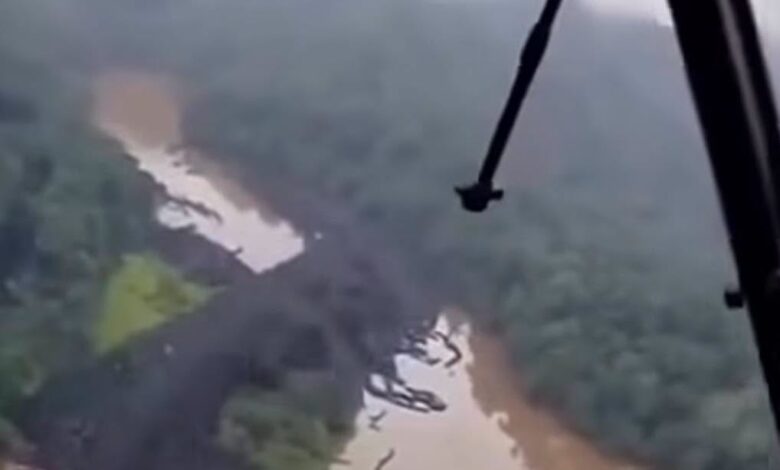
That kind of story is designed to feel convincing, but it follows a very familiar pattern:
dramatic buildup, vague location, unnamed footage, and a mystery that’s “too real to ignore.” In reality, there’s no verified scientific evidence of a giant unknown creature appearing in a jungle like this.
What people do often capture on camera are misidentified real things—large animals partly obscured by vegetation, shadows stretching at unusual angles, or even machinery (like excavators or logging equipment) seen from a distance. In dense jungle environments, scale and perspective can be very misleading.
There’s also a long history of similar claims tied to folklore. For example, legends like Bigfoot or Yeti often resurface when unclear footage goes viral.
In many cases, later analysis shows hoaxes, editing tricks, or simple misinterpretations.
Modern video tools make it even harder to trust what you see. With CGI and AI editing, a convincing “towering figure in the mist” can be created without much effort.
Even small distortions—like compression artifacts or motion blur—can make ordinary objects look unnatural when slowed down or zoomed in.
Scientists don’t dismiss these clips out of hand—they just require solid evidence. That means clear footage, multiple angles, physical traces, and independent verification. Without that, a video remains interesting but unproven.
So the most likely explanation isn’t a hidden guardian emerging from myth—it’s a mix of storytelling, visual ambiguity, and possibly digital manipulation.
The first challenge is deciding what a recording actually shows before deciding what a story says it shows. In an unclear jungle scene, the outline of an object may be incomplete. Leaves can conceal its lower half, mist can hide its edges, and a moving camera can prevent any stable comparison. A dramatic description supplies a complete creature where the picture may supply only a shape.
Size is particularly difficult to judge without a dependable reference. An object close to the camera can appear much larger than something farther away, while foreground branches may look as though they belong to the same space as a distant silhouette. If the recording never gives a clear view of that relationship, estimates of height remain uncertain. Enlarging the image does not restore information that the camera never captured.
The sound and presentation can influence interpretation too. An alarming caption, a suspenseful soundtrack, or a freeze frame may direct attention toward the most unusual part of a scene while leaving out the ordinary context around it. Viewers should be able to separate the original recording from the effects added when it was posted. A reaction to an edited presentation is not the same thing as independent identification of its subject.
An extraordinary claim needs more than a striking visual impression. The original file, a clear location, and a consistent account of when and how the recording was made would help establish context. Observations from separate witnesses could help determine whether they saw the same thing independently. These details do not guarantee a particular conclusion, but their absence leaves the dramatic interpretation resting on very little.
The mystery can still be interesting without becoming a discovery. Uncertainty is a reasonable response to an image that does not reveal enough. A viewer can be curious about the shape while declining to give it a name, a history, or an impossible size. That distinction keeps an intriguing clip from being turned into evidence for a story it cannot support on its own.