
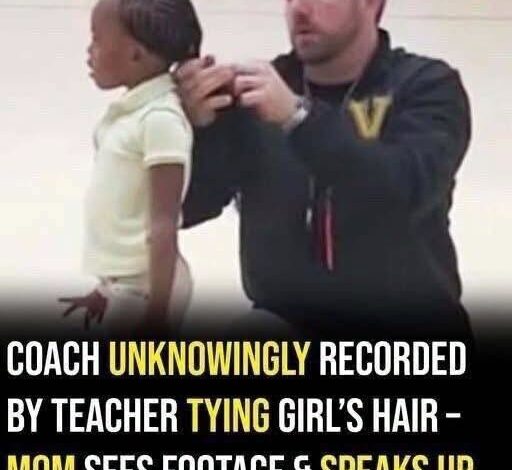
In a noisy elementary school gym in Valdosta, Georgia, a simple moment unfolded that would soon capture widespread attention. During a kindergarten basketball game, phys-ed teacher and coach Jonathan Oliver was focused on guiding his students when a young girl named Kristen approached him with a small request.
She asked if he could put her hair in a ponytail so she could play more comfortably and see better.
Elementary school sports
Without hesitation, he stepped away from the game and knelt down to help her, treating the moment as naturally as any part of his job. What made the scene so powerful was its simplicity.
A colleague quietly recorded the interaction, not realizing how widely it would be shared. To Oliver, the act was nothing more than caring for one of his students, ensuring she could participate without distraction.
But to those who later watched the video, it represented something deeper—a reminder of the quiet, everyday acts of care that teachers provide without seeking recognition.
When the video spread online and was later featured on national television, it resonated with many parents and viewers. Kristen’s mother expressed that the moment was no surprise, reflecting the trust and appreciation she already felt.
For her, and many others, it highlighted the role teachers play beyond academics.
They often step into roles that go far beyond the classroom, offering guidance, support, and a sense of security. This simple act became a symbol of dedication and compassion.
In a time when educators face many challenges, it served as a reminder of the impact they have on young lives. Sometimes, it is the smallest gestures that leave the most lasting impressions.
The request was small enough that Oliver could respond immediately, but it mattered to the child who made it. Kristen wanted her hair out of the way so she could take part in the game. Helping her was therefore connected to the activity already happening in the gym, not separate from the responsibility of teaching. It removed a simple obstacle to participation.
The video drew attention because it made that ordinary care visible to people who were not in the room. A classroom or gym contains many moments that never become part of a formal lesson plan. A child needs reassurance, a practical adjustment, or a brief pause before rejoining the group. Those moments can be easy to overlook until a recording invites others to notice them.
Kristen’s mother’s response adds an important perspective. For her, the footage did not reveal a surprising new side of someone she had distrusted. It reflected the confidence she already had in the care her child received. That familiarity gives the moment a meaning beyond the reaction of strangers seeing the clip for the first time.
Oliver’s own view, as described in the account, also keeps the event grounded. He did not understand the act as a performance for an audience. He was responding to a student in front of him. The contrast between that simple intention and the later public attention is what gives the story its warmth.
The lasting impression comes from a child asking for help and an adult treating the request with patience and respect. No dramatic gesture was needed. The ponytail allowed the game to continue, while the recording reminded viewers how much consideration can be contained in a brief, practical act.