
A short video showing a person’s head and neck covered with numerous raised, dark-colored bumps has caught attention online. The unusual appearance has left viewers wondering what might cause such skin changes and, more importantly, whether something like this can be prevented.
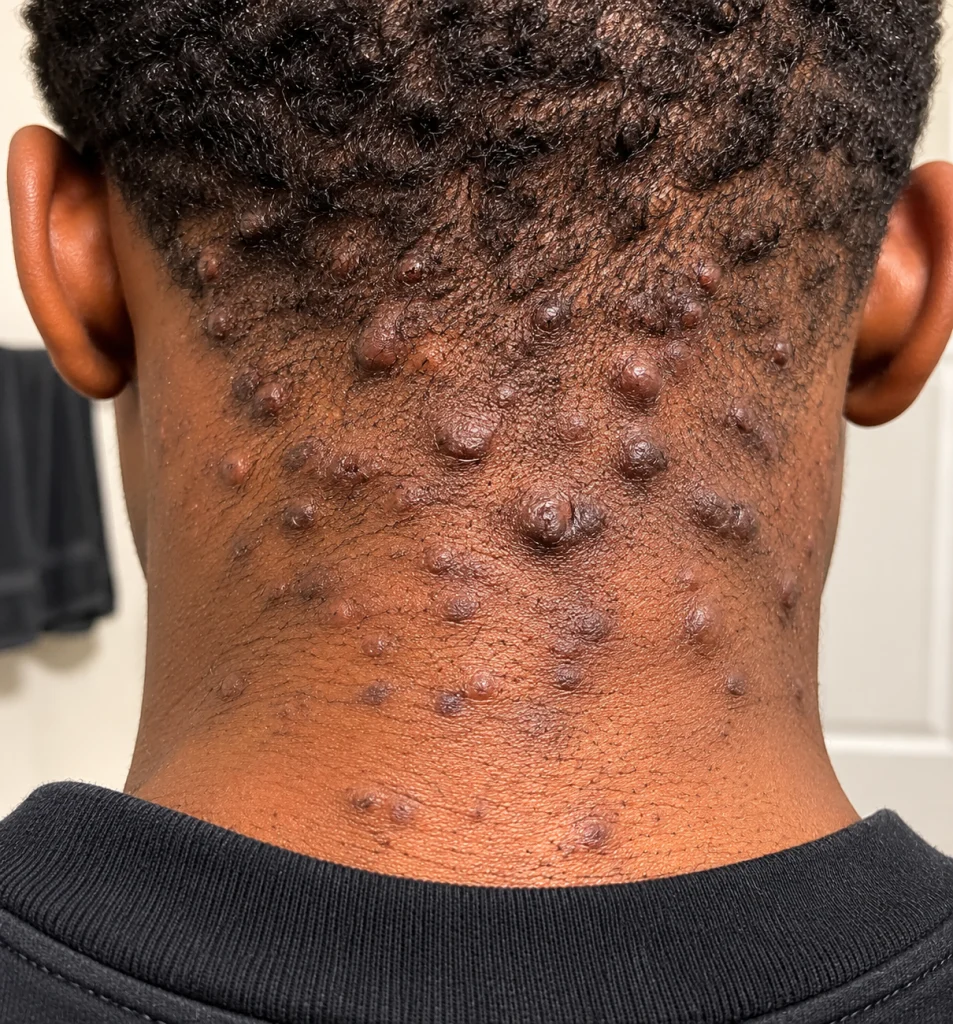
The footage shows a grooming tool being moved around the affected area, but it does not provide enough medical information to identify the condition. Several different skin problems can cause bumps or growths around the scalp and hairline, and they do not all have the same causes.
Some conditions are associated with irritated hair follicles, shaving, or inflammation. Others may involve infections, scarring, benign skin growths, or entirely different medical issues.
Dermatologists emphasize that unusual or persistent skin changes should be examined rather than diagnosed from a photograph or social media video.
What Can Cause Bumps Around the Scalp and Neck?
One possible category of problems involves the hair follicles. Folliculitis, for example, develops when hair follicles become damaged or inflamed, sometimes allowing germs to enter and cause an infection.
It can produce acne-like bumps that may be itchy, painful, or surrounded by redness. Shaving, frequent rubbing, tight clothing, and other forms of irritation can contribute to follicle damage.
Another problem is razor bumps, which develop when shaved hairs curve back toward the skin and become trapped. This can cause inflammation and sometimes leave dark marks or raised scars.
There are also conditions that cause longer-lasting bumps and scarring around the back of the scalp and neck. These require a proper medical assessment because their appearance can overlap with other skin conditions.
It is important to stress that none of these conditions can be confirmed from the video alone.
Can These Skin Problems Be Prevented?
Not every skin growth or scalp condition can be prevented. However, certain everyday habits may reduce irritation and lower the risk of some problems involving hair follicles.
1. Avoid Shaving Too Closely
One of the most useful steps for people who experience recurring razor bumps is changing their shaving technique.
Shaving too closely can make it easier for hairs to grow back into the skin. Dermatologists recommend shaving in the direction of hair growth rather than against it.
Using gentle strokes, avoiding repeated passes over the same area, and considering an electric trimmer that leaves a little hair length may also help reduce irritation.
The American Academy of Dermatology recommends these techniques to help prevent razor bumps.
2. Keep Razors and Grooming Equipment Clean
Grooming equipment should be cleaned and maintained according to the manufacturer’s instructions.
Disposable razor blades should be replaced regularly, and reusable equipment should be allowed to dry completely between uses. Dirty or poorly maintained tools can contribute to skin irritation and may increase the risk of infection.
Avoid sharing razors or personal grooming tools with other people.
3. Do Not Pick, Squeeze, or Cut Unusual Bumps
A raised bump can be tempting to squeeze or remove, particularly when it appears uncomfortable or affects someone’s appearance.
However, picking, cutting, or attempting to shave over an unfamiliar growth can damage the surrounding skin. It may lead to bleeding, irritation, infection, or scarring.
A bump that looks unusual should be assessed by a healthcare professional before anyone attempts to remove it.
4. Reduce Friction Around the Hairline
Constant rubbing can irritate sensitive skin and damage hair follicles.
Tight collars, hats, helmets, and other equipment that repeatedly rub against the back of the head or neck may contribute to irritation in some people.
Choosing comfortable clothing, keeping grooming routines gentle, and avoiding unnecessary pressure on an irritated area may help.
5. Pay Attention to Changes in Your Skin
One of the most important habits is checking your skin regularly.
A new growth does not automatically mean something serious is happening. However, a spot that grows, changes color, bleeds, becomes painful, or refuses to heal deserves medical attention.
The American Academy of Dermatology recommends having changing or bleeding skin growths examined by a board-certified dermatologist. The scalp and neck should not be overlooked simply because they are harder to see.
When Should You See a Dermatologist?
Some small skin irritations improve when the source of friction or shaving irritation is removed. Other conditions require prescription treatment or a different medical approach.
It is especially important to arrange an examination when bumps:
- Continue growing or spreading.
- Become painful, swollen, or increasingly irritated.
- Produce pus or bleed repeatedly.
- Leave thickened or raised scars.
- Do not improve or keep returning.
- Change in appearance, color, or texture.
Seek prompt medical attention if an area becomes increasingly red, hot, swollen, or painful, particularly if fever or other signs of a spreading infection develop.
A dermatologist can examine the affected area, review the person’s medical history, and decide whether additional testing or treatment is needed.
Why Trying to Remove Them at Home Can Be Risky
The video may make the grooming process look straightforward, but removing or shaving over unusual skin growths is not something people should attempt without knowing what they are dealing with.
Some growths are harmless, while others may need specific treatment. Cutting into an unidentified lesion can cause unnecessary injury and make it harder for a medical professional to assess the original problem.
Even when a condition is related to shaving or inflamed follicles, treatment depends on its severity and cause. In some cases, a dermatologist may recommend medication or professional procedures rather than ordinary grooming.
The Most Important Prevention Lesson
Seeing an unusual skin condition online can make people curious or concerned about their own health. But appearances alone rarely tell the complete story.
Good grooming habits, clean equipment, gentle shaving techniques, and avoiding unnecessary friction can help reduce certain forms of skin irritation. Protecting the scalp and neck from excessive sun exposure is also important for overall skin health.
However, there is no single prevention routine that can stop every type of skin growth.
The safest approach is to pay attention to changes, avoid attempting to remove unfamiliar bumps at home, and seek professional advice when something looks unusual or continues to worsen.
A short video may show what a skin condition looks like, but only a proper medical examination can help explain what is actually happening.