
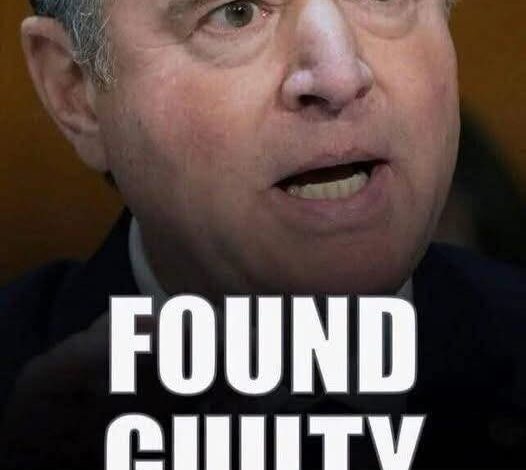
The Facebook graphic says found guilty. The linked page reports allegations in interview summaries and does not establish a conviction.
Newly released FBI interview summaries accuse Senator Adam Schiff of authorizing leaks of classified information during the Trump–Russia probe to politically damage then-President Donald Trump. A whistleblower, a former Democratic intelligence officer, said Schiff told staff the committee would leak material “derogatory” to Trump to help “indict President TRUMP.”
Role of Eric Swalwell
The whistleblower claimed Rep. Eric Swalwell likely acted as the conduit for the leaks, which were aimed at bolstering the “Russiagate” narrative. Swalwell has denied involvement and questioned the allegations’ credibility.
Political Motives
The source alleged Schiff expected to be CIA Director under Hillary Clinton and, after her loss, sought to weaken Trump’s presidency through leaks. They say they reported this to authorities but were fired soon after.
Media Connections
Investigative journalist Paul Sperry suggested the leaks may have reached Washington Post reporter Ellen Nakashima, potentially influencing high-profile Trump–Russia coverage
The Facebook graphic says “found guilty,” but the linked article reports allegations attributed to a source interviewed by the FBI. An interview summary records what a person told investigators. It does not establish that a court has heard the evidence, found the account reliable or returned a verdict. The page names no trial, conviction, sentencing hearing or judgment supporting the words on the image.
The distinction can be followed within the text itself. The source is described as a former intelligence officer who claims to have knowledge of discussions about leaking information. The article also reports a suspicion about a possible conduit. A claim about what someone authorized and a suspicion about who passed something on are separate propositions. Neither becomes a finding of guilt simply because it appears in an investigative record.
The account includes a denial from Eric Swalwell. That response belongs alongside the allegation, particularly when a short social caption can travel without the qualifications in the article. The linked page supplies no underlying trial record that would resolve the dispute. Readers therefore have a report of competing assertions rather than a stated legal outcome.
Another limitation is the incomplete headline. It stops after saying records suggest Schiff approved something, leaving the article body to explain the allegation. The dramatic image supplies an answer of its own, but the two parts do not carry the same evidentiary weight. A headline or image can summarize an author’s position; it cannot supply a missing judgment.
The public significance of an allegation about classified information makes the source and status of each statement especially important. Reporting can identify the allegation, who made it, where it was recorded and what the people named have said in response. Moving beyond those points requires additional evidence. The text available here does not demonstrate a conviction of Adam Schiff for the conduct described.
The accurate description of this item is a report about allegations in interview summaries. The wording of the Facebook image should not be treated as proof that a court has decided those allegations. A later development would need its own date and identifiable record.